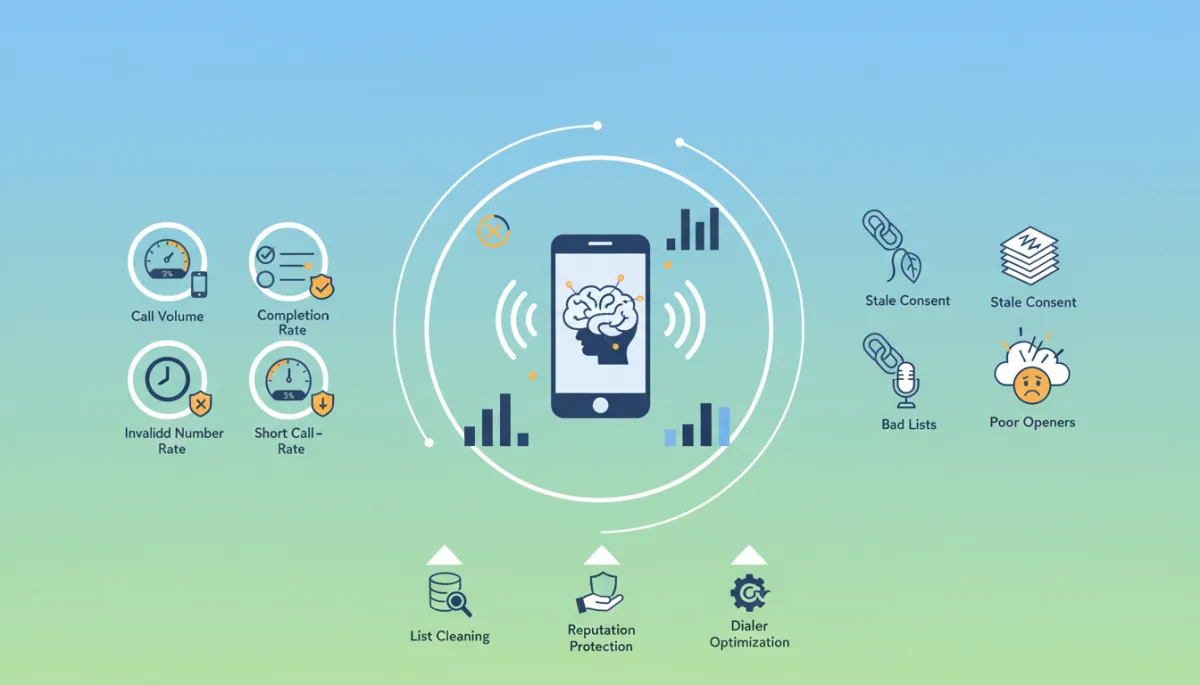
AI Dialers: Best Practices for Real Estate Teams
Real Estate, Outbound Calling, AI Dialers
Outbound Calling Health Best Practices for Real Estate Teams Using AI Dialers
A healthy outbound engine is now a strategic asset for real estate teams. When you rely on AI and automated dialers, protecting your numbers, reputation, and metrics is just as important as setting appointments.
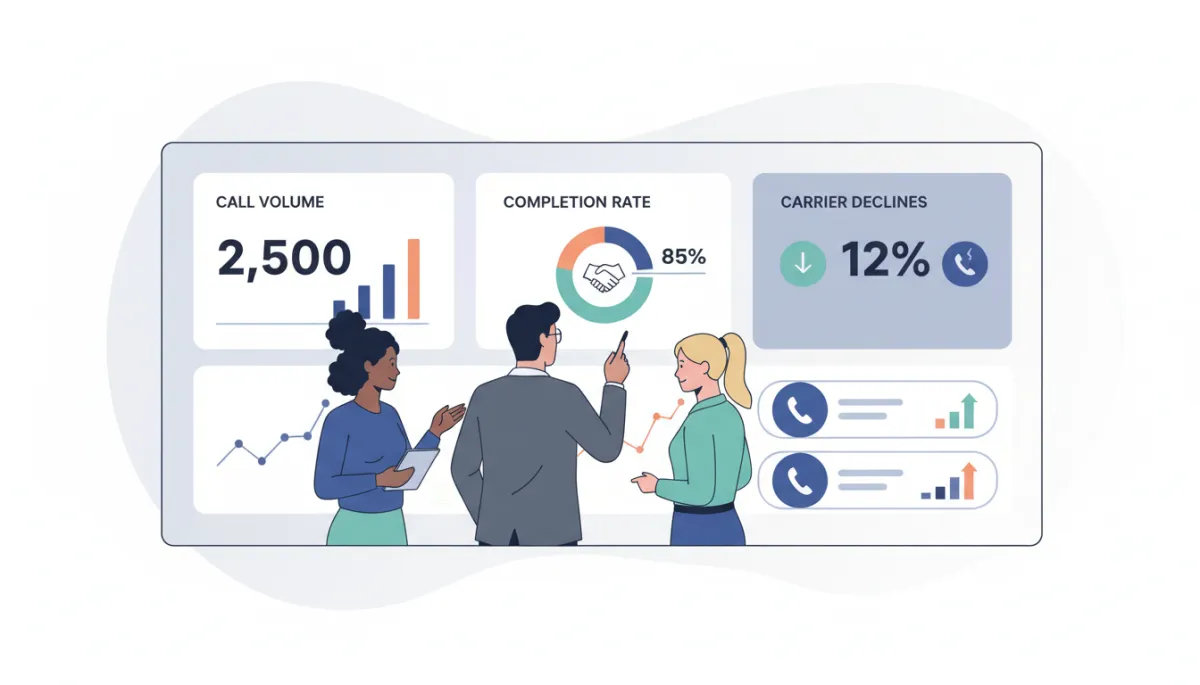
What “Healthy” Looks Like: Core Dialer Benchmarks
Before you can protect your calling reputation, you need clear benchmarks. The numbers below assume legal, compliant calling to consumer lists in North America, using an AI or power dialer.
- Call volume: For a power dialer, 300–400 dials per agent per day is a healthy range, aligned with recent outbound benchmarks for real estate prospecting.
- Completion rate (calls that ring through and are not blocked): Aim for 85–95% of attempted calls completing. If fewer than 80% of attempts complete, carriers may be throttling or flagging your traffic.
- Short call rate (under 15 seconds): Keep this under 25–30%. Some short calls are normal (wrong numbers, fast hang-ups), but consistently high rates can signal spammy patterns to carriers.
- Carrier decline / “network error” rate: Healthy ranges are typically below 5–7%. If 10% or more of your attempts are declined by carriers, your numbers or traffic patterns are likely under scrutiny.
- Invalid number rate: For professionally sourced real estate data, keep invalids under 5–10%. Rates above that suggest data problems that will drag down connection rates and raise red flags.
When your lists are clean and your dialing patterns are controlled, you should also see a live connection rate around 6–12% and appointment conversions in the 3–5% range, with top performers reaching 8–12% of dials converting to appointments, according to recent industry analyses from Vulcan7 and other outbound benchmarks.
Why Dialer Metrics Go Unhealthy
If your completion rate is dropping, short calls are spiking, or carrier declines are creeping up, it is rarely random. In 2026, regulators, carriers, and consumers are all less tolerant of aggressive or sloppy dialing. Four root causes show up repeatedly in real estate operations.
1. Stale or Weak Consent
Privacy rules and consumer expectations have tightened. “Stale consent” — leads who opted in years ago, or whose relationship with your brand is unclear — increases complaints, opt-outs, and negative signals to carriers. Recent commentary on consent management stresses that outdated permissions can create both compliance risk and lower engagement, which quickly shows up in your metrics as more short calls and higher decline rates.
2. Bad or Over-Aged Lists
Cheap or recycled data sources often contain wrong, disconnected, or reassigned numbers. That drives up your invalid number rate and wastes AI dialer capacity. It also reduces live connection rates, forcing agents to push volume even higher just to maintain appointment targets, which can further stress your reputation.
3. Burst Dialing and Aggressive Patterns
AI and multi-line dialers make it easy to overdo it. Rapid-fire attempts from the same numbers, minimal time between calls, and hammering the same contact repeatedly in a short window all look like robocall behavior to carriers. The result: rising carrier decline rates, more “spam likely” labels, and shrinking completion rates, even if your agents are compliant and professional.
4. Weak Openers and Script Discipline
Your first five seconds determine whether a call becomes a conversation or a fast hang-up. Poor openers — long intros, confusing explanations, or overly “salesy” AI voices — inflate your short call rate. Over time, that pattern contributes to negative analytics at the carrier level, even if you are technically following the rules.
Action Steps You Can Take This Week to Protect Your Numbers
You do not need a six‑month project to improve calling health. The following steps are realistic for a solo agent or a team leader to implement within a week.
1. Audit Yesterday’s Metrics
- Pull a one‑day report from your AI or power dialer: call volume, completion rate, short call rate, carrier declines, and invalid numbers.
- Flag any metric outside the healthy ranges above. This becomes your baseline and helps you prioritize which issue to tackle first.
2. Clean and Segment Your Lists
- Remove obviously invalid or bounced numbers from recent campaigns. If your invalid rate is above 10%, pause that source and test a higher‑quality provider.
- Segment leads by recency and relationship (e.g., “opt‑in within 12 months,” “past inquiry,” “cold neighborhood data”). Call your freshest, most permission‑rich segments first.
3. Refresh Consent and Suppression Rules
- Work with your CRM and dialer to ensure DNC and callback requests are honored 100%. In 2026, regulators expect zero tolerance here.
- Set a “consent freshness” rule — for example, do not auto‑dial consumer leads whose last interaction with your brand is more than 18–24 months old without a re‑engagement step (such as an email asking them to confirm interest).
4. Tame Your Dialing Patterns
- Cap simultaneous lines per agent to a reasonable level (often 2–3, depending on your provider’s guidance) to avoid bursty traffic.
- Space repeat attempts to the same contact across days and time windows instead of hammering them in a single hour. This still supports list penetration goals while looking far more natural to carriers.
5. Tighten Your Openers and AI Prompts
- Review your first 10 seconds of talk time. Whether a human or AI voice starts the call, the opener should be simple, honest, and relevant to homeowners: who you are, why you are calling, and the specific value for them.
- If you use AI agents, refine prompts to avoid long monologues. Encourage quick questions that invite engagement, which reduces hang‑ups and lowers short call rates.
Bringing It All Together
AI and automated dialers can multiply your prospecting output, but only if you protect the health of your numbers and your reputation with carriers and consumers. By anchoring to clear benchmarks, understanding the root causes of unhealthy metrics, and implementing targeted fixes this week, you can keep your outbound engine compliant, efficient, and focused on what matters most: real conversations with homeowners and more signed listings.
SEO Title: Outbound Calling Health Best Practices for Real Estate Agents Using AI Dialers
Meta Description: Learn the 2026 benchmarks for call volume, completion rate, short call rate, carrier declines, and invalid numbers — plus concrete steps real estate agents and team leaders can take this week to protect their AI dialer reputation.
